

Automotive Quality Control | How High-End Automotive Brands Protect Product Quality at Scale



What happens when a premium automotive product fails in the real world? Beyond the immediate safety risk, the cost shows up fast - in warranty claims, recalls, brand damage, and lost customer trust. In the automotive industry, quality control is not a back-office function. It is a frontline risk-management discipline that directly impacts product safety, durability, and long-term profitability.
For logistics, sourcing, and product development professionals responsible for complex global supply chains, automotive quality control is the difference between controlled growth and expensive disruption.
What Automotive Quality Control Really Means (and Why It’s Often Misunderstood)
Automotive quality control refers to the set of quality control processes used to ensure automotive products meet defined quality standards, safety standards, and customer expectations throughout the manufacturing process. It is often confused with quality assurance, but the two play different roles.
- Quality assurance (QA) focuses on designing systems, procedures, and controls to prevent defects.
- Quality control (QC) verifies - through inspections, audits, testing, and data analysis - that products actually meet quality requirements.
In automotive manufacturing, both must operate inside a structured quality management system (QMS) aligned with industry standards such as IATF 16949 and ISO 9001. When QC is treated as an afterthought, quality issues surface downstream - when fixes are most expensive.
Why Automotive Quality Control Is Non-Negotiable for High-End Automotive Products
High-end automotive products operate under tighter tolerances, higher customer expectations, and stricter regulatory oversight. A cosmetic defect may be unacceptable in a premium interior trim. A functional defect in braking, steering, or electronics can escalate into a product safety incident.
Key risk factors include:
- Globalized supply chain complexity
- Multi-tier supplier dependencies
- Increased use of electronics, software, and sensors
- Rising regulatory scrutiny around emissions and safety standards
- Growing warranty exposure for automakers
For electric vehicles especially, where new components and manufacturing processes are still maturing, quality control must account for real-world usage, durability, and long-term performance - not just lab results.
Automotive Quality Standards and Industry Frameworks That Matter
IATF 16949 and Automotive-Specific Requirements
IATF 16949 defines the baseline for automotive quality management systems. It emphasizes:
- Risk-based thinking
- Supplier quality management
- Defect prevention
- Continuous improvement
Certification alone does not guarantee product quality, but it establishes the framework for disciplined execution.
ISO 9001 and Supporting Quality Systems
ISO 9001 supports broader quality management principles such as process consistency, corrective actions, and documentation control. Many automotive suppliers operate under both ISO 9001 and IATF frameworks.
Safety, Emissions, and Regulatory Compliance
Automotive products must comply with market-specific safety standards and emissions regulations. Non-compliance can halt shipments, trigger recalls, or result in regulatory penalties - often after products are already in the field.
Automotive Quality Control Across the Production Process
Pre-Production: Setting Quality Upstream
Quality failures rarely originate on the assembly line - they start with unclear specifications or supplier capability gaps.
Critical pre-production controls include:
- Raw material validation
- Supplier audits and capability assessments
- Prototype inspection and testing
- PPAP (Production Part Approval Process) submissions
- FMEA (Failure Mode and Effects Analysis) to identify potential failures early
FMEA is particularly valuable for high-end automotive products, where even minor deviations can affect performance or customer satisfaction.
In-Process Quality Control on the Production Line
During automotive manufacturing, in-process quality control focuses on preventing defects rather than detecting them later.
Key tools include:
- SPC (Statistical Process Control) to monitor process stability
- Statistical process control charts for real-time detection of drift
- Automated vision systems and sensors
- Assembly line audits and layered process checks
Modern production lines increasingly rely on automation, real-time data, and even artificial intelligence to detect anomalies before they turn into rework or scrap.
For high-volume automotive manufacturing, early detection can save millions in rework and warranty exposure.
Read More: https://www.onesilq.com/blog/during-production-inspections
Final Inspection and Pre-Shipment Quality Control
Final quality control verifies that finished automotive products meet all specific requirements before leaving the factory.
This stage typically includes:
- Functional testing
- Visual and dimensional inspection
- Packaging verification
- Documentation and traceability checks
While final inspection is necessary, relying on it alone is risky. By this point, defects often require rework or worse, shipment delays.
Read More: https://www.onesilq.com/blog/pre-shipment-inspection-in-china-what-it-covers-why-it-matters
Common Automotive Quality Issues and Their Root Causes
Even well-run programs encounter quality issues. The most common include:
- Dimensional deviations beyond tolerances
- Surface finish and cosmetic defects
- Electrical failures and sensor malfunctions
- Premature wear impacting durability
- Assembly errors under production pressure
The underlying causes usually trace back to:
- Inconsistent raw material quality
- Poor supplier quality controls
- Inadequate process validation
- Insufficient training on the production line
Supplier Quality: The Weakest Link in Automotive Supply Chains
Supplier quality is often the largest risk exposure in automotive quality control. Tier-1 suppliers may perform well, while Tier-2 or Tier-3 suppliers introduce hidden variability.
Best practices include:
- Regular supplier audits
- Clear quality requirements and specifications
- Incoming quality control for critical components
- Defined escalation and corrective action workflows
High-performing automakers treat suppliers as extensions of their own manufacturing process not external vendors.
Continuous Improvement as a Quality Discipline
Quality control is not static. Leading automotive organizations embed continuous improvement initiatives into daily operations.
This includes:
- Trend analysis of quality data
- Warranty and field failure feedback loops
- Process optimization using Six Sigma tools
- Periodic review of FMEA assumptions
Continuous improvement ensures quality systems evolve alongside product complexity, especially as electric vehicles and advanced electronics become mainstream.
Advanced Technologies Shaping Automotive Quality Control
Artificial Intelligence for Inspection Summaries and Decision Support
Artificial intelligence is increasingly being used in automotive quality control not to replace engineers or inspectors, but to aggregate, analyze, and summarize inspection data at scale.
In high-volume automotive manufacturing, quality teams generate massive amounts of data across:
- Incoming raw material inspections
- In-process quality control checks
- SPC charts and statistical process control data
- Final inspection and test results
- Supplier quality audits and corrective actions
AI systems help convert this fragmented data into inspection summaries that highlight trends, recurring failure modes, and emerging quality risks. Instead of reviewing hundreds of individual inspection reports, quality managers can focus on exception-based insights that matter most.
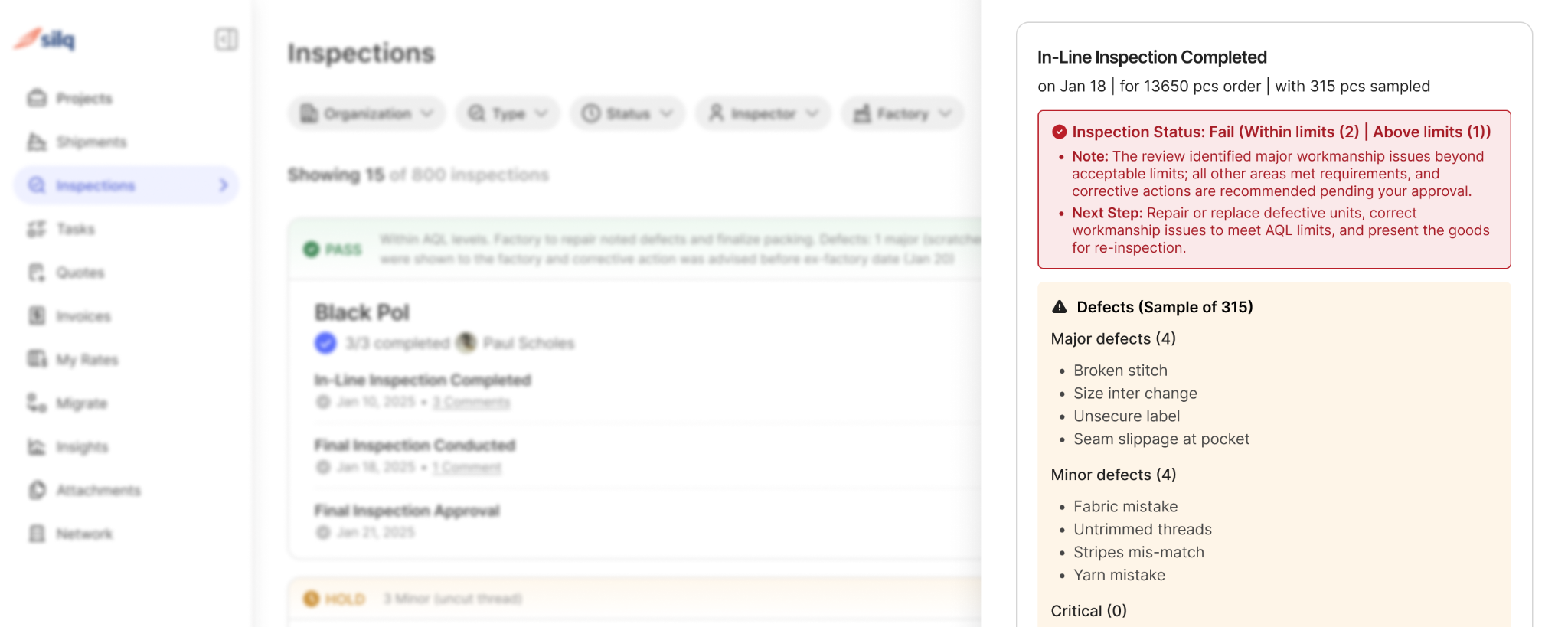
Common use cases include:
- Identifying patterns in quality issues across production lines or suppliers
- Flagging potential failures before they escalate into rework or warranty claims
- Supporting root cause analysis by correlating defects with process variables
- Improving response time for corrective actions
When applied correctly, AI enhances visibility across the supply chain without compromising engineering judgment. The value lies in speed, consistency, and prioritization, especially for automakers managing multiple plants, suppliers, and automotive products simultaneously.
Quality Control, Customer Satisfaction, and Brand Protection
For high-end automotive brands, customer satisfaction is inseparable from perceived quality. A single quality failure can undermine years of brand investment.
Effective automotive quality control directly impacts:
- Warranty costs
- Recall frequency
- Product safety
- Customer loyalty
In the real world, customers may forgive delays but rarely forgive defects.
Quality Control as a Core Business Lever
Automotive quality control is not just about meeting industry standards. It is about protecting brand equity, ensuring product safety, and enabling supply chain resiliency at scale.
Organizations that integrate quality control across sourcing, manufacturing, and logistics don’t just reduce risk they build durable, high-quality automotive products that perform where it matters most: on the road.
For professionals responsible for automotive manufacturing outcomes, the mandate is clear. Quality must be engineered, measured, and enforced - every step of the way.
Automotive quality control ensures automotive products meet defined quality standards, safety requirements, and performance expectations throughout the manufacturing process.
Quality assurance focuses on building systems to prevent defects, while quality control verifies product quality through inspections, testing, and audits.
Common automotive quality standards include IATF 16949, ISO 9001, and market-specific safety and emissions regulations.
Supplier quality directly affects product durability, tolerances, and reliability, making audits and corrective actions essential to prevent downstream failures.
By identifying quality issues early through inspections, SPC, and root cause analysis, quality control helps prevent defects from reaching customers.




Ready for Supply Chain Predictability?
Importers using Silq ship smarter, safer, and with total control.