

Full Container Load (FCL) Shipping from China to the USA | Everything You Need to Know


If you’re responsible for your company’s supply chain efficiency and resiliency, you already know this: China-USA freight isn’t a background task you can set and forget. Capacity swings, tariffs, and volatile freight rates mean that how you choose to ship cargo matters just as much as what you ship. Despite years of “China+1” sourcing and diversification into Vietnam, India, and others, China is still one of the top origin hubs for U.S. containerized imports.
This guide breaks down what FCL shipping from China to the USA entails. We’ll cover what a full container load actually is, how pricing really works, what transit time you should plan for, where a tech-powered freight forwarder like Silq fits in, and how to choose between FCL, LCL, and air freight without blowing up your freight costs or your sanity.
What Is an FCL Shipment?
In an FCL (full container load) shipment, a single shipper uses the entire container. You’re not sharing space with other shippers, and your cargo is sealed in one box from origin to destination. In practice, that means:
- One bill of lading tied to one shipper and one consignee
- One container picked up, loaded, sealed, and handed to the shipping line
- No consolidation or deconsolidation with freight from other companies
This term is most common in sea freight and ocean shipping, although people often use it loosely whenever they’re talking about container shipping or international shipping in general.
FCL Container Options and Capacity
The workhorses of FCL shipping are the 20-foot and 40-foot containers. The most common options you’ll see:
- 20’ standard container: ~33 cubic meter (CBM) capacity
- 40’ standard container
- 40’ high cube container
Typical internal dimensions and capacity:
A 40-foot container has twice the capacity of a 20-foot container, and the high cube version offers additional height for extra volume.
How Are FCL Shipments Charged?
In FCL shipping, you’re essentially renting the entire box at a fixed rate in USD. Whether you fill it entirely or not, your base container cost is the same. Underneath that container rate, you typically have:
- Ocean freight: the port-to-port cost charged by the shipping line
- Origin charges: terminal handling, documentation, export filing, factory pick up, local trucking, and any consolidation or short-term warehousing
- Destination charges: terminal handling, customs clearance, brokerage fees, and delivery to your warehouse
- Equipment-related fees: chassis fees, per-diem, and occasionally surcharges driven by equipment imbalance
Rates fluctuate based on the direction and balance of trade on specific shipping routes. A Shanghai → Los Angeles lane will often price differently from a Ningbo → New York or Shenzhen → Savannah all-water move, even in the same week.
FCL vs LCL: Which Is Better?
A common question from importers: “Which is cheaper, FCL or LCL?”
It depends on how much space you’re really using.
- FCL is usually cheaper on a cost-per-CBM basis once your volume crosses a certain threshold. You pay a fixed rate for the entire container, and any extra cubic meter you fill lowers your unit cost.
- LCL is usually better for smaller shipments that don’t fill a box. You pay based on chargeable volume/weight and share space with other shippers in a consolidation warehouse, creating classic LCL shipments.
FCL emerged as the standard for bulk container shipping and repeat replenishment. LCL was built to serve smaller shipments that don’t justify a full box but still need sea freight economics. Shipping costs benefit from economies of scale. The more you ship in one go, the more you spread fixed freight costs and local charges across your units.
Read More: FCL vs. LCL Shipping | Choosing the Best Freight Option
How to Calculate FCL Shipment Costs
When you’re comparing FCL shipping against LCL or air freight, it helps to break down the math:
The Two Big Buckets
At the simplest level, your FCL pricing has two primary buckets:
- Container freight cost – the rate for the container from port to port
- Equipment and local handling – chassis fees, terminal handling, local trucking at origin and destination
On top of that, you layer scenario-specific items:
- Under FOB incoterms: destination port fees, customs duties, trucking to your DC or 3PL, and any extra warehousing
- Under EXW: add inland trucking in China, export clearance, and sometimes consolidation or stuffing charges
When you’re importing goods at scale, you want to think in landed cost per unit, not just container-level charges. That means folding in:
- Base freight shipping cost and any accessorials
- Tariffs and duties
- Domestic distribution (trucking, warehousing, and parcel)
- Cargo insurance and any recurring inspection or QC costs
Most logistics teams will run this model in USD per unit or per order so that they can quickly compare shipping options and shipping methods across FCL, LCL, and air.
How Long Do FCL Shipments Take?
For FCL shipping from China to USA, the realistic sea freight transit time is:
- To West Coast ports like Los Angeles or Long Beach: Roughly 15-25 days port-to-port from main gateways like Shanghai, Ningbo, Shenzhen, and Guangzhou
- To East Coast ports like New York: Roughly 25-35 days, depending on whether you’re using Panama, Suez, or transshipment routes
One critical advantage of FCL vs LCL is end-to-end transit time. Because FCL doesn’t require cargo consolidation at origin or deconsolidation at destination, you can often save multiple days compared with LCL shipping. For time-sensitive but not ultra-urgent inventory, that’s a meaningful buffer. The trade-off is obvious: ocean freight is slower than air freight, but if you plan ahead, FCL is still the most economical way to ship cargo in bulk.
Where Silq Fits: Tech-Powered FCL Shipping with Upstream Visibility
Now, let’s talk about the “who” in your strategy.
You can bolt all of this together yourself: forwarder A, customs broker B, inspection provider C, random spreadsheet of freight shipments, screenshots, or you can work with a single freight forwarder who can actually see—and show you—the whole picture.
That’s where Silq comes in.
Tech-Powered Freight Services
Silq is a tech-powered freight forwarder focused on shipments from Asia to the USA, combining:
- Ocean freight & sea freight for FCL and LCL
- Integrated air freight options for time-sensitive cargo
- Factory inspections and QC upstream in Asia
- A single platform for real-time visibility across inspections, shipments, and exceptions
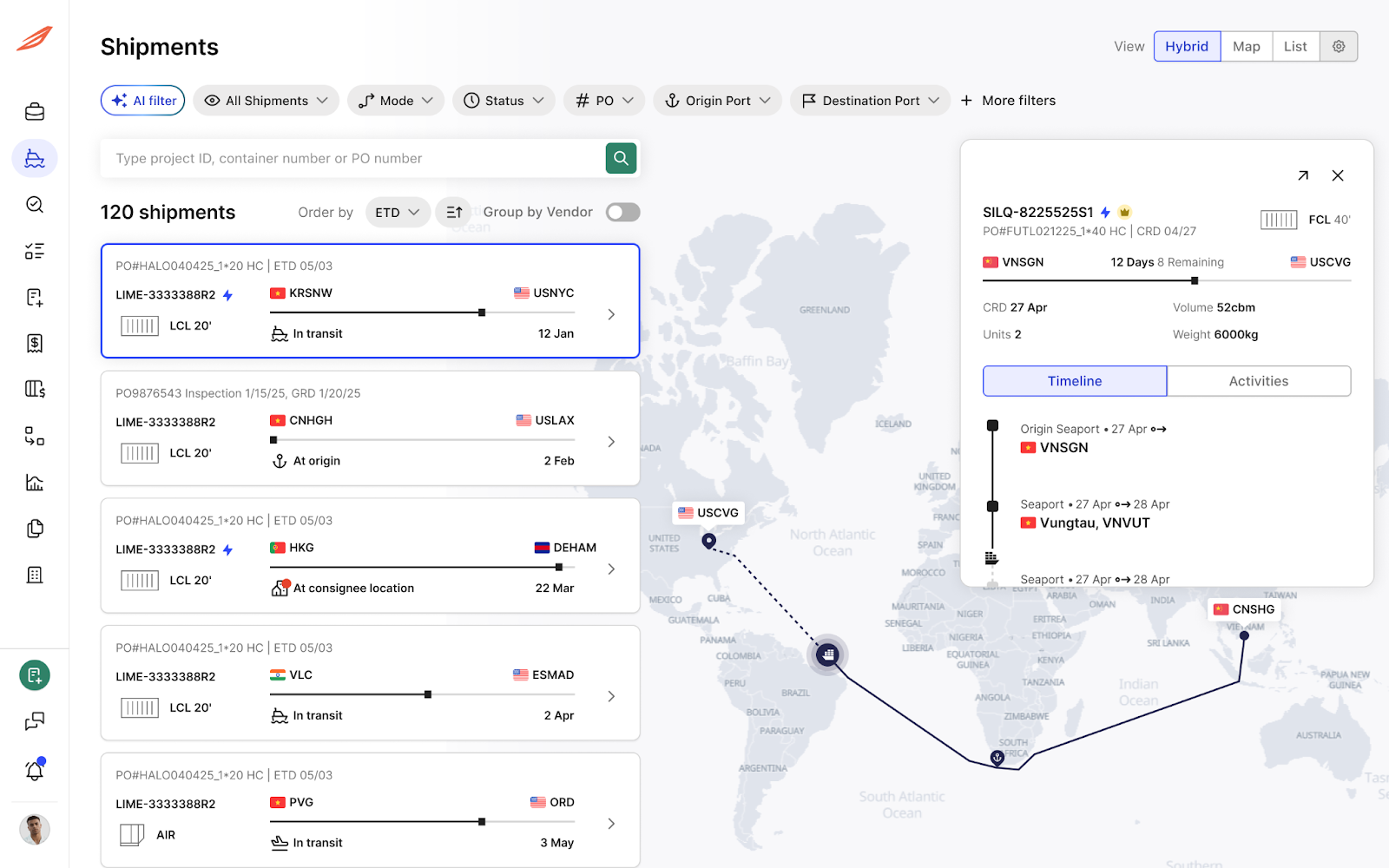
Instead of juggling multiple portals and email threads, your team sees:
- Which POs are booked as FCL shipping vs LCL shipments
- Live status on containers from Shanghai, Shenzhen, Ningbo, or Yantian to Los Angeles, Long Beach, or New York.
- Inspection results before you ship cargo, so you’re not discovering issues on the warehouse floor
Transparent Pricing You Can Actually Plan Around
Silq’s platform is built around transparent shipping rates and clear pricing, not mystery surcharges:
- All-in FCL and LCL quotes with origin, port-to-port, and destination spelled out
- Clear breakdown of what’s included
- No surprise add-ons buried in PDFs
For teams managing budgets across multiple POs and product lines, this makes landed cost modeling a lot less painful.
Upstream Visibility with Factory Inspections
The big edge: Silq doesn’t just move containers; it helps you decide what should move and when:
- Inline and pre-shipment inspections at the factory
- Container loading checks so your entire container is loaded to spec
- Issues flagged before you commit to freight shipping, not after

That upstream visibility means you can confidently load a full container load and ship, instead of gambling on quality and hoping cargo insurance bails you out later.
End-to-End View: From Factory Floor to Final Mile
Silq gives you an end-to-end view, tying together:
- POs and production dates
- Inspections and quality status
- FCL bookings, shipping routes, ETAs, and exceptions
- Downstream moves via trucking and last-mile partners
Instead of stitching together data across a dozen systems, you get one platform view, and real-time updates your team can actually act on.
Advantages of FCL Shipping
Why do so many high-end brands default to FCL for their core flows?
1. Lower Risk of Damage and Mis-Handling
Because one shipper controls the entire container, your cargo isn’t being shuffled around in a consolidation terminal with other freight shipments. Fewer touchpoints in the shipping process means:
- Lower risk of carton crushing or water exposure
- Lower risk of mis-sorting and “lost in the CFS” scenarios
- A cleaner accountability chain when something does go wrong
2. Better Per-Unit Economics for High-Volume Flows
For high-volume SKUs, FCL is hard to beat on a per-unit basis. Once you’re filling a large share of the box, your freight costs per unit are usually significantly lower than LCL. You’re using the entire container instead of paying LCL margins to multiple intermediaries along the way.
3. Faster, Cleaner End-to-End Flow
Because FCL avoids consolidation and deconsolidation:
- Containers can move directly from the factory gate to CY at origin, then straight to your DC at destination
- You avoid sitting on the floor at an LCL terminal waiting for other shippers’ freight
- It’s simpler to build a repeatable, end-to-end playbook for door-to-door shipping services
Potential Risks of FCL
Sealed Containers and Inspections
Once the container is sealed, it typically stays sealed until it hits your facility or a customs exam site. That’s a plus for security and chain of custody, but it can become painful if:
- Documentation is inconsistent, and your box gets pulled for inspection
- Customs wants a closer look, and the container has to be opened and re-handled
Good documentation and a proactive customs broker are your best insurance here, especially when you’re shipping goods under tighter compliance regimes.
Improper Loading and Securing
If a container is loaded poorly (bad stack patterns, no bracing, weak cartons), damage can be significant. Mitigation tactics:
- Agree on a load plan with your supplier (especially for fragile or high-value goods)
- Use adequate pallets, corner boards, and dunnage
- Consider inspections or loading supervision on critical freight shipments
Long Transit Time vs Air or Express
Like any ocean freight shipping method, FCL is slow compared with air freight. If you’re dealing with time-sensitive launches or firefighting stock-outs, FCL alone won’t save you.
Most mature importers use a blend:
- FCL for predictable, high-volume base demand
- LCL or air for top-up orders and late-breaking demand
- Clear rules for when each mode is allowed
FCL vs LCL vs Air: Quick Decision Framework
When you’re deciding between FCL, LCL, and air, ask yourself:
- Volume: How many CBM and cartons are we moving? Does this realistically fill a container?
- Timing: How time-sensitive is this PO? Can we live with standard transit time, or do we need an expedited option for certain SKUs?
- Network: Which port pair best supports our warehousing footprint on the West Coast or East Coast?
- Risk: How sensitive is this product to damage, theft, or regulatory scrutiny? Do we need additional QC, cargo insurance, or special handling?
- Commercials: What do the actual shipping rates look like across FCL, LCL, and air for this specific move, in USD per unit?
In practice:
- FCL → high-volume, repeat flows, core SKUs
- LCL → smaller shipments, tests, long tail
- Air → surgical moves when margin and urgency justify it
Treat your freight forwarder, customs broker, and other logistics providers as partners in this decision, not just vendors throwing over a menu of freight services. Share your shipping needs, demand plan, and constraints so they can design the right mix of shipping options and shipping routes for you, with real-time updates when things change.
Choosing FCL for your Next Shipment
FCL shipping from China to the USA is still the backbone of global trade for premium and high-volume brands. It’s:
- Cheaper per unit once you cross a certain volume
- Lower risk than less than container load for many product categories
- More predictable than living on LCL and air in perpetual firefight mode
The catch is that you need the right combination of:
- Mode mix (FCL vs LCL vs air)
- Port strategy (West Coast vs East Coast vs Gulf)
- Partners like Silq to give you upstream visibility and dedicated support
Done right, FCL shipping becomes a repeatable, end-to-end engine for moving high-end product at scale, without sacrificing margin, reliability, or customer experience. Let Silq handle the heavy lifting so you can ship goods that arrive on time, on budget, and up to spec.



Ready for Supply Chain Predictability?
Importers using Silq ship smarter, safer, and with total control.