

Apparel Quality Control Services: In-House, Third-Party, or Platform-Led? How to Choose
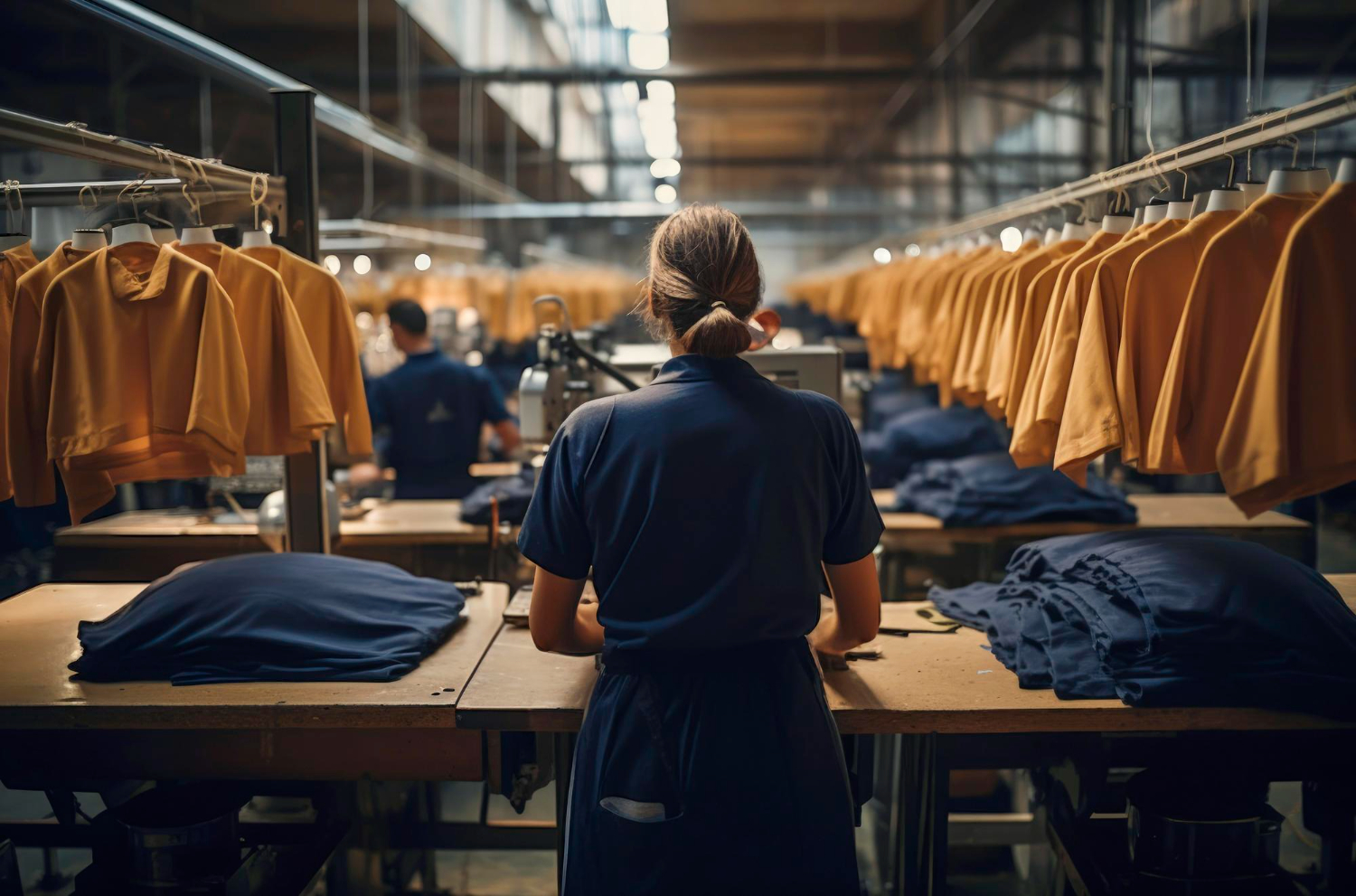


A single mislabeled care tag can get a listing suspended on Amazon. A batch of 5,000 jackets with inconsistent stitching can wipe out a season's margin - and you won't find out until the goods are already on a boat. That's the entire reason apparel quality control services exist: to catch problems at the factory, not at the return desk.
But "quality control services" isn't one thing. Some brands build an in-house QC team. Others hire a traditional third-party inspection agency. A newer group works with platform-led providers that pair on-site inspectors with real-time reporting software. Each model solves a different problem, and picking the wrong one is its own kind of quality risk.
This guide breaks down what apparel QC services actually cover, how the three models compare, and how to decide which one fits your production setup.
What Falls Under "Apparel Quality Control Services"
Garment quality control isn't a single checkpoint - it's a set of inspections spaced across the production timeline, each designed to catch a different category of risk:
- Factory audits - assessing a supplier's capacity, equipment, and compliance before you commit production
- Pre-production inspections - checking approved samples, fabric, and trims before bulk cutting starts
- During-production inspections - catching stitching, sizing, or fabric defects early enough to fix them before they scale across the run
- Pre-shipment inspections - a final AQL-based check on finished, packed goods before they leave the factory
If you want the full checklist of what inspectors look for at each stage - fabric, stitching, labeling, packaging - we've covered that in detail separately. This piece focuses on a different question: who should be running these inspections for you, and how to evaluate them.
Three Ways Brands Handle Apparel QC
In-house QC team. You hire and train your own inspectors, either based near your factories or flying out for key milestones. This gives you full control over standards and institutional knowledge of your product, but it's expensive to scale across multiple countries and factories, and coverage gaps show up fast if someone's traveling or a factory adds an unplanned production run.
Third-party inspection agency. You book individual inspections (a factory audit here, a pre-shipment inspection there) with an outside quality control provider. This is the most common setup for growing brands - it's flexible and doesn't require permanent headcount. The tradeoff is consistency: unless you're working with the same agency and the same checklist every time, quality standards can drift between inspectors, and reporting often comes back as static PDFs with no shared system to track trends across suppliers.
Platform-led inspection. A newer model where a quality control provider combines trained, apparel-specific inspectors with a shared platform - so every factory is checked against the same standardized checklist, reports come back digitally with defect photos and AQL breakdowns, and you can see inspection status across every supplier and country in one dashboard instead of a folder of separate PDFs.
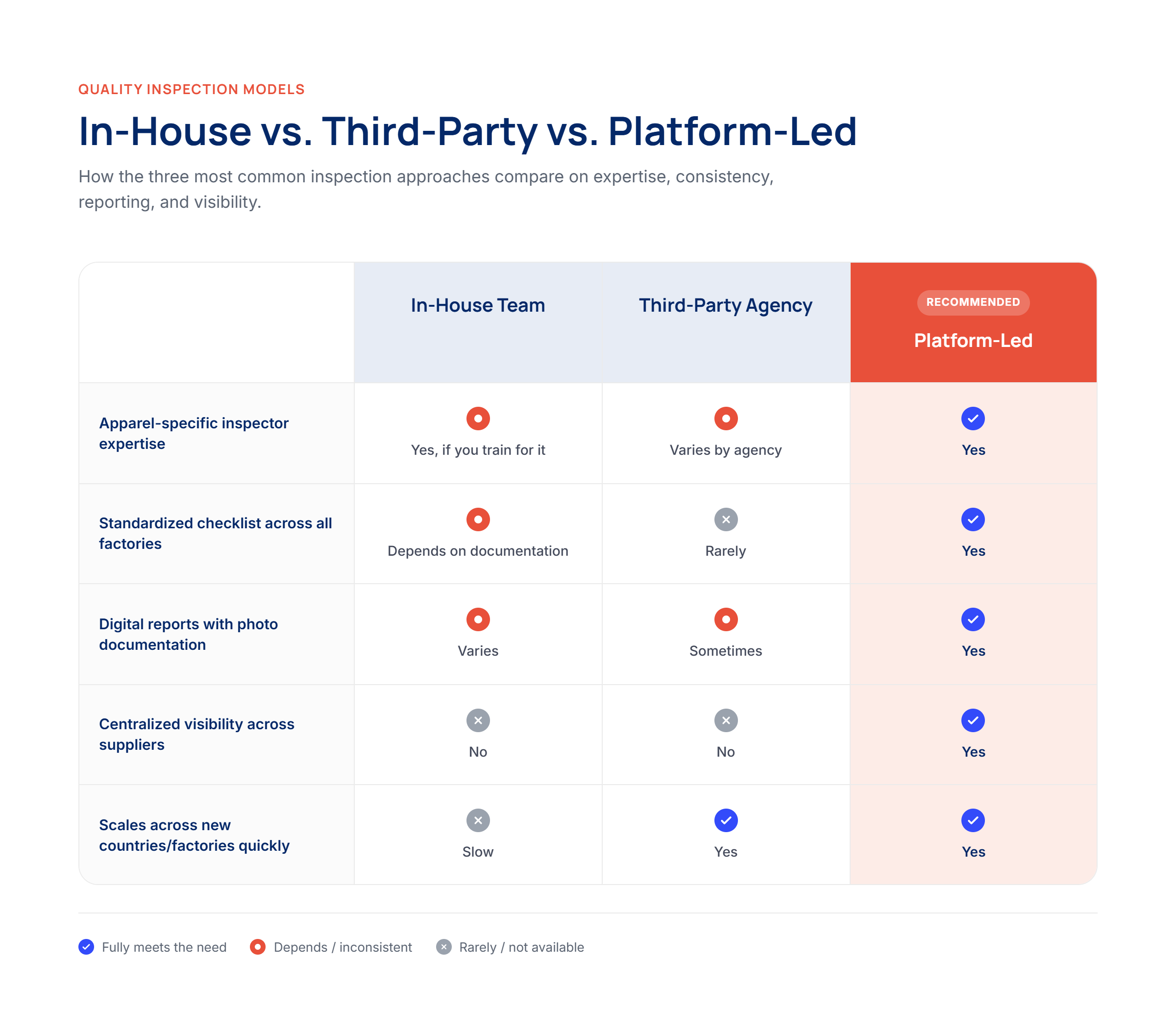
None of these is universally "correct" - the right fit depends on how many factories you're managing and how much production visibility you actually need day to day.
What a Full Apparel QC Package Typically Includes
Whichever model you choose, a proper apparel quality control service should cover the same core ground:
- AQL-based sampling - inspectors pull a statistically valid sample size rather than checking every unit, following international sampling standards
- Defect classification - findings are sorted into critical, major, and minor defects so you can make a fast, informed shipment decision
- Measurement verification - garments checked against your approved size specs and tolerances
- Labeling and compliance checks - care labels, country-of-origin, barcodes, and other regulatory requirements
- Photo-documented reporting - every finding backed by a picture, not just a checklist tick
Want more on how a specific inspection stage works? We've broken down pre-production inspections, during-production inspections, and why AQL sampling matters in more depth elsewhere on the blog.
How to Decide Which Model Fits Your Brand
A few questions tend to settle this quickly:
How many factories and countries are you sourcing from? One or two suppliers in a single country is manageable with an in-house hire or a single third-party agency. Five-plus factories across multiple countries is where a platform-led approach starts to pay for itself - the value is in comparing supplier performance on one standard, not just inspecting each shipment in isolation.
How much mid-production visibility do you need? If you only find out about a problem at final inspection, you've already lost the chance to fix it cheaply. Brands running tighter margins or fast-turn seasonal drops usually need during-production checkpoints, not just a pre-shipment inspection.
Who needs to see the reports? If it's just you, a folder of PDFs from a third-party agency might be enough. If sourcing, QA, and merchandising teams all need shared visibility especially across time zones - a platform with a live dashboard removes a lot of back-and-forth.
Questions to Ask Any Apparel QC Provider
Before booking with any quality control provider - third-party or platform-led get clear answers on:
- Do their inspectors have apparel-specific experience, or is garment inspection one category among many they cover?
- Is their checklist standardized, or built fresh for every factory?
- How fast do reports come back, and do they include defect photos?
- Can they cover every country you currently source from, or will you need a second provider as you expand?
- Can you see a sample inspection report before you commit?
A provider that can't answer these clearly is worth a second look before you build a season's shipment schedule around them.
Choosing the Right Apparel QC Partner
Apparel quality control services aren't optional once you're sourcing overseas at any real volume, the only real question is which model delivers the visibility you need without more overhead than your team can manage. If you're weighing your options, Silq runs on-site apparel quality control inspections in China and other major sourcing countries, combining apparel-trained inspectors with a shared platform so every factory reports back the same way.
Get a sample report to see what that looks like before your next production run ships.



Ready for Supply Chain Predictability?
Importers using Silq ship smarter, safer, and with total control.